• Home
  • Memo
    • Past Memo Archives
    • Podcast (iTunes)
    • RSS Feed
  • Roy H. Williams
    • Private Consulting
    • Public Speaking
    • Pendulum_Free_PDF
    • Sundown in Muskogee
    • Destinae, the Free the Beagle trilogy
    • People Stories
    • Stuff Roy Said
      • The Other Kind of Advertising
        • Business Personality Disorder PDF Download
        • The 10 Most Common Mistakes in Marketing
          • How to Build a Bridge to Millennials_PDF
          • The Secret of Customer Loyalty and Not Having to Discount
          • Roy’s Politics
    • Steinbeck’s Unfinished Quixote
  • Wizard of Ads Partners
  • Archives
  • More…
    • Steinbeck, Quixote and Me_Cervantes Society
    • Rabbit Hole
    • American Small Business Institute
    • How to Get and Hold Attention downloadable PDF
    • Wizard Academy
    • What’s the deal with
      Don Quixote?
    • Quixote Wasn’t Crazy
      • Privacy Policy
      • Will You Donate A Penny A Wedding to Bring Joy to People in Love?

Monday Morning Memo

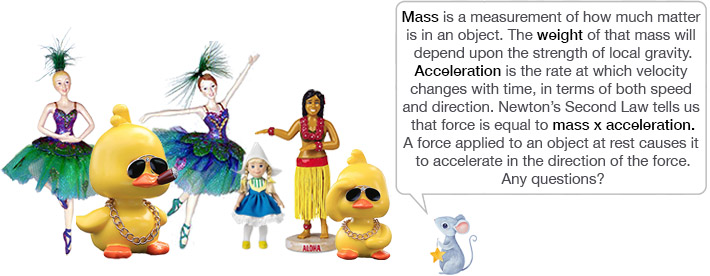
A good many times I have been present at gatherings of people who, by the standards of the traditional culture, are thought highly educated and who have with considerable gusto been expressing their incredulity at the illiteracy of scientists. Once or twice I have been provoked and have asked the company how many of them could describe the Second Law of Thermodynamics. The response was cold: it was also negative. Yet I was asking something which is the scientific equivalent of: Have you read a work of Shakespeare’s?  I now believe that if I had asked an even simpler question – such as, ‘What do you mean by mass, or acceleration,’ which is the scientific equivalent of saying, ‘Can you read?’ – not more than one in ten of the highly educated would have felt that I was speaking the same language. So the great edifice of modern physics goes up, and the majority of the cleverest people in the western world have about as much insight into it as their neolithic ancestors would have had.”

– C.P. Snow,
from his book, The Two Cultures and the Scientific Revolution

In 2008, The Two Cultures and the Scientific Revolution by C.P. Snow was named as of the 100 books that most influenced public discourse since the Second World War.

Email Newsletter

Sign up to receive the Monday Morning Memo in your inbox!

Download the PDF "Dictionary of the Cognoscenti of Wizard Academy"

Random Quote:

“Supporters of strongmen . . . are genuinely baffled when told that electoral victory doesn’t grant them unlimited power. Instead, they see any check on the power of an elected government as undemocratic. However, democracy doesn’t mean majority rule; rather, it means freedom and equality for all. Democracy is a system that guarantees everyone certain liberties, which even the majority cannot take away.

Nobody disputes that in a democracy the representatives of the majority are entitled to form the government and to advance their preferred policies in myriad fields. If the majority wants war, the country goes to war. If the majority wants peace, the country makes peace. If the majority wants to raise taxes, taxes are raised. If the majority wants to lower taxes, taxes are lowered. Major decisions about foreign affairs, defense, education, taxation, and numerous other policies are all in the hands of the majority.

But in a democracy, there are two baskets of rights that are protected from the majority’s grasp. One contains human rights. Even if 99 percent of the population wants to exterminate the remaining 1 percent, in a democracy this is forbidden, because it violates the most basic human right—the right to life. The basket of human rights contains many additional rights, such as the right to work, the right to privacy, freedom of movement, and freedom of religion. These rights enshrine the decentralized nature of democracy, making sure that as long as people don’t harm anyone, they can live their lives as they see fit.

The second crucial basket of rights contains civil rights. These are the basic rules of the democratic game, which enshrine its self-correcting mechanisms. An obvious example is the right to vote. If the majority were permitted to disenfranchise the minority, then democracy would be over after a single election. Other civil rights include freedom of the press, academic freedom, and freedom of assembly, which enable independent media outlets, universities, and opposition movements to challenge the government. These are the key rights that strongmen seek to violate. While sometimes it is necessary to make changes to a country’s self-correcting mechanisms—for example, by expanding the franchise, regulating the media, or reforming the judicial system—such changes should be made only on the basis of a broad consensus including both majority and minority groups. If a small majority could unilaterally change civil rights, it could easily rig elections and get rid of all other checks on its power.”

- Yuval Noah Harari, Nexus: A Brief History of Information Networks from the Stone Age to AI (2024)

The Wizard Trilogy

The Wizard Trilogy

More Information

  • Privacy Policy
  • Wizard Academy
  • Wizard Academy Press

Contact Us

512.295.5700
corrine@wizardofads.com

Address

16221 Crystal Hills Drive
Austin, TX 78737
512.295.5700

The MondayMorningMemo© of Roy H. Williams, The Wizard of Ads®