• Home
  • Memo
    • Past Memo Archives
    • Podcast (iTunes)
    • RSS Feed
  • Roy H. Williams
    • Private Consulting
    • Public Speaking
    • Pendulum_Free_PDF
    • Sundown in Muskogee
    • Destinae, the Free the Beagle trilogy
    • People Stories
    • Stuff Roy Said
      • The Other Kind of Advertising
        • Business Personality Disorder PDF Download
        • The 10 Most Common Mistakes in Marketing
          • How to Build a Bridge to Millennials_PDF
          • The Secret of Customer Loyalty and Not Having to Discount
          • Roy’s Politics
    • Steinbeck’s Unfinished Quixote
  • Wizard of Ads Partners
  • Archives
  • More…
    • Steinbeck, Quixote and Me_Cervantes Society
    • Rabbit Hole
    • American Small Business Institute
    • How to Get and Hold Attention downloadable PDF
    • Wizard Academy
    • What’s the deal with
      Don Quixote?
    • Quixote Wasn’t Crazy
      • Privacy Policy
      • Will You Donate A Penny A Wedding to Bring Joy to People in Love?

Monday Morning Memo

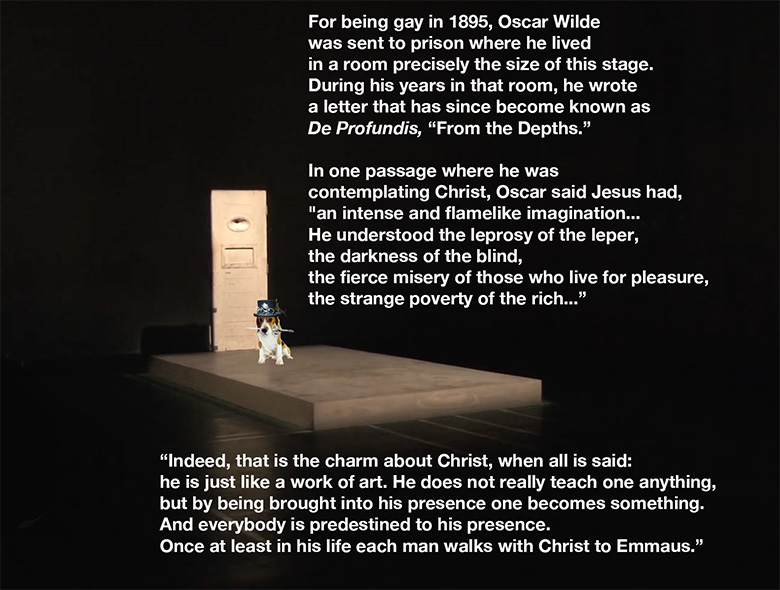
“ee-MAY-us” From the Good News of Luke, chapter 24, verses 13-35
 
That same day two of Jesus’ followers were walking to the village of Emmaus, seven miles from Jerusalem. As they walked along they were talking about everything that had happened. As they talked and discussed these things, Jesus himself suddenly came and began walking with them.  But God kept them from recognizing him.

He asked them, “What are you discussing so intently as you walk along?”

They stopped short, sadness written across their faces. Then one of them, Cleopas, replied, “You must be the only person in Jerusalem who hasn’t heard about all the things that have happened there the last few days.”

“What things?” Jesus asked.

“The things that happened to Jesus, the man from Nazareth,” they said. “He was a prophet who did powerful miracles, and he was a mighty teacher in the eyes of God and all the people. But our leading priests and other religious leaders handed him over to be condemned to death, and they crucified him. We had hoped he was the Messiah who had come to rescue Israel. This all happened three days ago. Then some women from our group of his followers were at his tomb early this morning, and they came back with an amazing report. They said his body was missing, and they had seen angels who told them Jesus is alive! Some of our men ran out to see, and sure enough, his body was gone, just as the women had said.”

Then Jesus said to them, “You foolish people! You find it so hard to believe all that the prophets wrote in the Scriptures. Wasn’t it clearly predicted that the Messiah would have to suffer all these things before entering his glory?” Then Jesus took them through the writings of Moses and all the prophets, explaining from all the Scriptures the things concerning himself.

By this time they were nearing Emmaus and the end of their journey. Jesus acted as if he were going on, but they begged him, “Stay the night with us, since it is getting late.” So he went home with them.  As they sat down to eat, he took the bread and blessed it. Then he broke it and gave it to them. Suddenly, their eyes were opened, and they recognized him. And at that moment he disappeared!

They said to each other, “Didn’t our hearts burn within us as he talked with us on the road and explained the Scriptures to us?” And within the hour they were on their way back to Jerusalem. There they found the eleven disciples and the others who had gathered with them, who said, “The Lord has really risen! He appeared to Peter.”

Then the two from Emmaus told their story of how Jesus had appeared to them as they were walking along the road, and how they had recognized him as he was breaking the bread.

Email Newsletter

Sign up to receive the Monday Morning Memo in your inbox!

Download the PDF "Dictionary of the Cognoscenti of Wizard Academy"

Random Quote:

“From Jung’s perspective, the Bible deals with issues that cannot be reduced to simple formulas, or slogans, or on-the-run question-and-answer catechesis. Its truths cannot be taken as a quick vaccination, once and for all. The issues scripture deals with are far less manageable; at best they can be hinted at. And because it speaks of such realities, it is driven, as Jung would believe, to speak in stories, figures, and symbols. The etymology of the word symbol in fact suggests this.

The word derives from two Greek roots, the prefix sym, which means ‘together,’ and the verb ballein (whence the English word ‘ballistics’) which means ‘to throw.’ Thus a symbol ‘throws’ two things ‘together,’ a subject and the image that seems best equipped to capture its meaning.

From Jung’s standpoint, symbols are the natural language of the soul. We produce symbols spontaneously in our dreams. We produce images and symbols in our everyday speech. From our private doodling to our public art, whether in business advertisements, in scientific journals, in religion and the arts, symbols surface to say what logic and plain speech cannot convey, at least not economically. Furthermore, Jung would say, all of us respond natively to symbols and we all know intuitively how to catch their meaning.”

- Jung and the Bible, Wayne G. Rollins (1983) Chapter 4

The Wizard Trilogy

The Wizard Trilogy

More Information

  • Privacy Policy
  • Wizard Academy
  • Wizard Academy Press

Contact Us

512.295.5700
corrine@wizardofads.com

Address

16221 Crystal Hills Drive
Austin, TX 78737
512.295.5700

The MondayMorningMemo© of Roy H. Williams, The Wizard of Ads®