• Home
  • Memo
    • Past Memo Archives
    • Podcast (iTunes)
    • RSS Feed
  • Roy H. Williams
    • Private Consulting
    • Public Speaking
    • Pendulum_Free_PDF
    • Sundown in Muskogee
    • Destinae, the Free the Beagle trilogy
    • People Stories
    • Stuff Roy Said
      • The Other Kind of Advertising
        • Business Personality Disorder PDF Download
        • The 10 Most Common Mistakes in Marketing
          • How to Build a Bridge to Millennials_PDF
          • The Secret of Customer Loyalty and Not Having to Discount
          • Roy’s Politics
    • Steinbeck’s Unfinished Quixote
  • Wizard of Ads Partners
  • Archives
  • More…
    • Steinbeck, Quixote and Me_Cervantes Society
    • Rabbit Hole
    • American Small Business Institute
    • How to Get and Hold Attention downloadable PDF
    • Wizard Academy
    • What’s the deal with
      Don Quixote?
    • Quixote Wasn’t Crazy
      • Privacy Policy
      • Will You Donate A Penny A Wedding to Bring Joy to People in Love?

Monday Morning Memo

Indy, I have been fascinated by your and the Wizard’s ongoing discussion of shadows and portals, not just in recent weeks, but over the past several years. It was with this in mind that this article fascinated me.

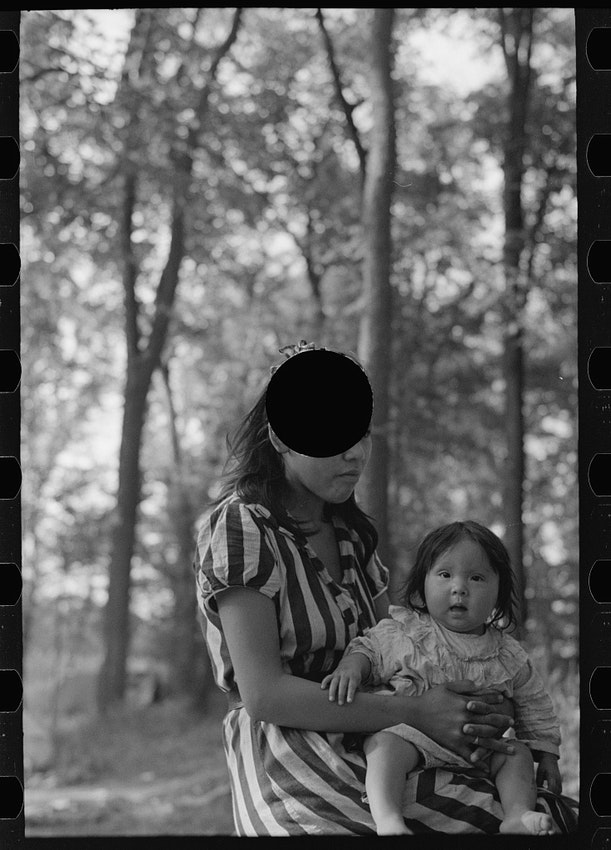
I was strangely drawn to these photographs.  Holes that can never be replaced, holes that forever mar the picture and cause me to wonder what was there.  Even in photographs where I can be fairly certain that nothing “important” was cut out, I am left wondering, “What if?”  or maybe more accurately, “What was?”  And then I find my mind filling in the missing pieces. 
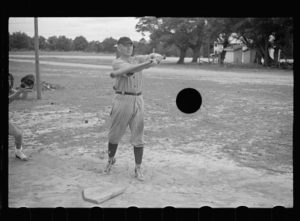
Finally, I find myself grieving at what was lost and will never be seen.  Since you can enter into photographs, can you enter into some of these pictures and tell us what we may be missing?

Just thinking out loud.
Shane Richardson

Dear Shane,
Happy to help. I took a stroll into each of the photos and found only two where something interesting was hiding behind the missing circle that had been hole-punched out. The Native American woman in the upper photo is named Tissa and and her child is Tish-Tish. She was impregnated and abandoned by an English reporter who spent a few months in early 1935 in the little Minnesota town where she lived. Sadly, she truly loved him and the only thing (other than Tish-Tish) that he left behind was a monocle, which Tissa is wearing in her right eye in the photograph. She feels the same way about that monocle that most women feel about their wedding ring. I spent a lot of time with her because she already knew that some dogs can talk, and I don’t run across that very often. I tell myself the Englishman later returned to Tissa and that they lived happily ever after.

The photo of the baseball player was hole-punched because a young hawk had pounced on a garden snake in the background and the skinny snake was fighting for its life. I ran toward the hawk, barking as I went, so it flew off and left the little snake behind. This creates an interesting paradox. Did I change history by altering an outcome? If so, there is no longer a young hawk hidden behind the hole-punch. So why don’t we see him flying away? And why am I not in the photo, running toward the hole punch?

Just thinking out loud,
Indy Beagle

Email Newsletter

Sign up to receive the Monday Morning Memo in your inbox!

Download the PDF "Dictionary of the Cognoscenti of Wizard Academy"

Random Quote:

“There is, of course, in Don Quixote’s stable a half-starved nag. After four days of meditation on such names as Bucephalus and Babieca, (the stallion of the Cid), Quixote christens his jade Rocinante. Rocin means hack horse: wherefore Don Quixote meant that his mount was before all the other hacks of the world.

This detail, appearing in the first chapter of the Book, might give the canny reader pause. ‘Why,’ he might ask, ‘if the deluded eyes—as we are told—of Don Quixote saw his hack equal to the steeds of Amadis or King Alexander, did he christen him with a name so comical and so revealing?’ The reader will be aware of a curious shift in this Don Quixote’s madness: a note of self-conscious irony, not usually found in the insane upon the point of their mania…

In the matter of the selecting of a Lady (that needed spur of every true knight-errant) it is clear that Don Quixote knows the facts about Aldonza Lorenzo, wench daughter of Lorenzo Cochuelo of El Toboso. Quite consciously, he turns her into the divine Dulcinea whom henceforth he will worship. This he makes his ‘truth’: there is no evidence that the fact of the girl is ever hidden from him. He needs a helmet—indeed he needs Mambrino’s magic helmet. A barber comes, riding an ass and on his head (for it is raining) a copper bleeding-dish. This is the golden helmet of Mambrino; and as such Don Quixote takes it. But in the parley before and after, with Sancho Panza, it is plain that the knight accepts Sancho’s fact about the dish: he merely turns it, for his own purpose, into his knightly ‘truth.'”

- - from Don Quixote: A Modern Scripture, by Waldo Frank. A feature in VQR, Volume 2, Number 1, Winter 1926

The Wizard Trilogy

The Wizard Trilogy

More Information

  • Privacy Policy
  • Wizard Academy
  • Wizard Academy Press

Contact Us

512.295.5700
corrine@wizardofads.com

Address

16221 Crystal Hills Drive
Austin, TX 78737
512.295.5700

The MondayMorningMemo© of Roy H. Williams, The Wizard of Ads®