• Home
  • Memo
    • Past Memo Archives
    • Podcast (iTunes)
    • RSS Feed
  • Roy H. Williams
    • Private Consulting
    • Public Speaking
    • Pendulum_Free_PDF
    • Sundown in Muskogee
    • Destinae, the Free the Beagle trilogy
    • People Stories
    • Stuff Roy Said
      • The Other Kind of Advertising
        • Business Personality Disorder PDF Download
        • The 10 Most Common Mistakes in Marketing
          • How to Build a Bridge to Millennials_PDF
          • The Secret of Customer Loyalty and Not Having to Discount
          • Roy’s Politics
    • Steinbeck’s Unfinished Quixote
  • Wizard of Ads Partners
  • Archives
  • More…
    • Steinbeck, Quixote and Me_Cervantes Society
    • Rabbit Hole
    • American Small Business Institute
    • How to Get and Hold Attention downloadable PDF
    • Wizard Academy
    • What’s the deal with
      Don Quixote?
    • Quixote Wasn’t Crazy
      • Privacy Policy
      • Will You Donate A Penny A Wedding to Bring Joy to People in Love?

Monday Morning Memo

From Stephen Semple, director of Wizard of Ads CANADA:

I came across this study from WordStream.
WordStream is a huge PPC company that works with over 1,000,000 advertisers.

They recently did a study of a particular PPC campaign that had a 300% increase in conversion rates over a short period of time (9 months).

These results puzzled them because they had changed nothing in the campaign.  They did not change the landing page, the bid strategy or the ads.  Nothing had been done to the campaign at all. So, what pushed the needle?  What they determined was that there was another campaign being run on another media (in this case Facebook) that created a halo effect.

Here was their conclusion in their words:
“What we are seeing here is that people with strong brand affinity have higher conversion rates than people without any, because people tend to buy from the companies they already heard of and begun to trust.” – Larry Kim, WordStream

From Craig Arthur, director of Wizard of Ads AUSTRALIA:

Hey Roy,

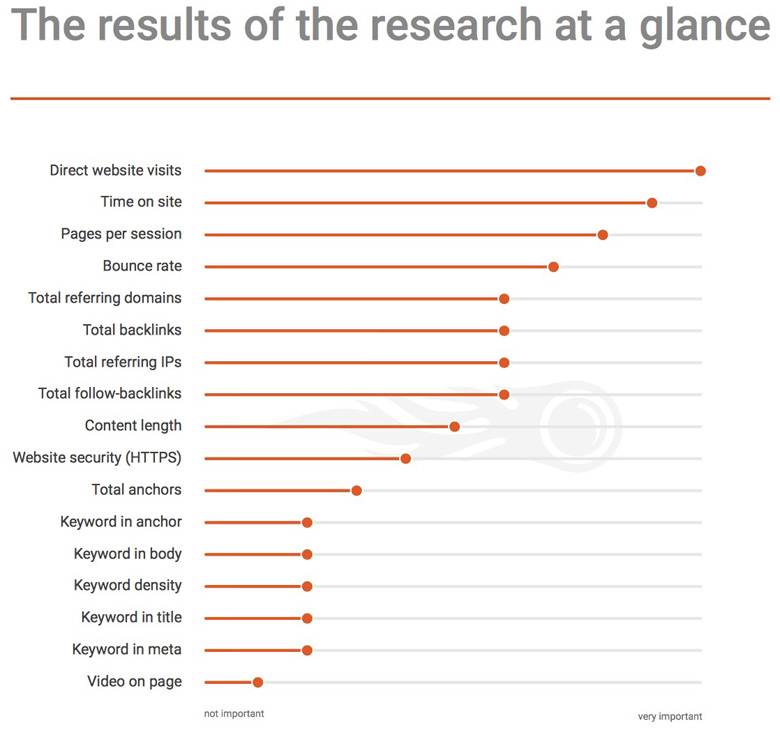
Please find attached a 55-page PDF of just-released research by SEMrush that examines website ranking factors.

My takeaway – Directing listeners to a website via good advertising appears to be the most powerful way to get your website to rank higher.

Key takeaways

▪  After adding 5 new factors, we can still see that direct website traffic is the most influential ranking factor. That is, when many users go to a website directly it is a good sign to Google that the domain has high authority and value. – Page 9 of 55

One of the main indicators of a website’s popularity is its number of visits. There are a lot of ways for visitors to find your website: organic search, paid ads, social networks, direct visits, referring domains, emails, etc. In our research, we checked how traffic influences page rankings and whether organic search traffic has the greatest influence.  – page 39 of 55

What it means to you as a marketer

After excluding organic search and other traffic data, we can see that there is a strong connection between the number of direct visits and the page position on the SERP. This could indicate that Google prioritizes domains with more authority and consequently more direct traffic when ranking the high-volume keyword group. This also means that organic ranking is not the only thing you should be concentrating on. Direct visits are fueled by your brand awareness, so building a strong brand image should be an essential part of your promotion strategy. Building brand awareness is as important as putting efforts into SEO. – page 42 of 55
 

Email Newsletter

Sign up to receive the Monday Morning Memo in your inbox!

Download the PDF "Dictionary of the Cognoscenti of Wizard Academy"

Random Quote:

“Why English is so Hard to Learn

1. The bandage was wound around the wound.

2. The farm was cultivated to produce produce.

3. The dump was so full that the workers had to refuse more refuse.

4. We must polish the Polish furniture shown at the store.

5. He could lead if he would get the lead out.

6. The soldier decided to desert his tasty dessert in the desert.

7. Since there is no time like the present, he thought it was time to present the present to his girlfriend.

8. A bass was painted on the head of the bass drum.

9. When shot at, the dove dove Into the bushes.

10. I did not object to the object which he showed me.

11. The insurance was invalid for the invalid in his hospital bed.

12. There was a row among the oarsmen about who would row.

13. They were too close to the door to close it.

14. The buck does funny things when the does (females) are present.

15. A seamstress and a sewer fell down into a sewer line,

16. To help with planting, the farmer taught his sow to sow.

17. The wind was too strong to wind the sail around the mast.

18. Upon seeing the tear in her painting she shed a tear.

19. I had to subject the subject to a series of tests.

20. How can I intimate this to my most intimate friend?

Heteronyms

These are brilliant. Homonyms or homographs are words of like spelling, but with more than one meaning and sound.

When pronounced differently; they are known as heteronyms.

“

- Marlene Davis

The Wizard Trilogy

The Wizard Trilogy

More Information

  • Privacy Policy
  • Wizard Academy
  • Wizard Academy Press

Contact Us

512.295.5700
corrine@wizardofads.com

Address

16221 Crystal Hills Drive
Austin, TX 78737
512.295.5700

The MondayMorningMemo© of Roy H. Williams, The Wizard of Ads®